No, this isn’t really about imbrication. The word is just an example representing all those complex, textured words we’re told not to use anymore. This is about what happens when we stop using precise, rich, language.
Pause. Why do I keep saying imbrication, anyway? It’s an odd word, obscure even. Every AI writing assistant flags it. Long before AI, my writing coach — yes, that’s a real thing — did too. Even several reviewers of Sístoles told me the same: Use simpler words. Ones people understand.
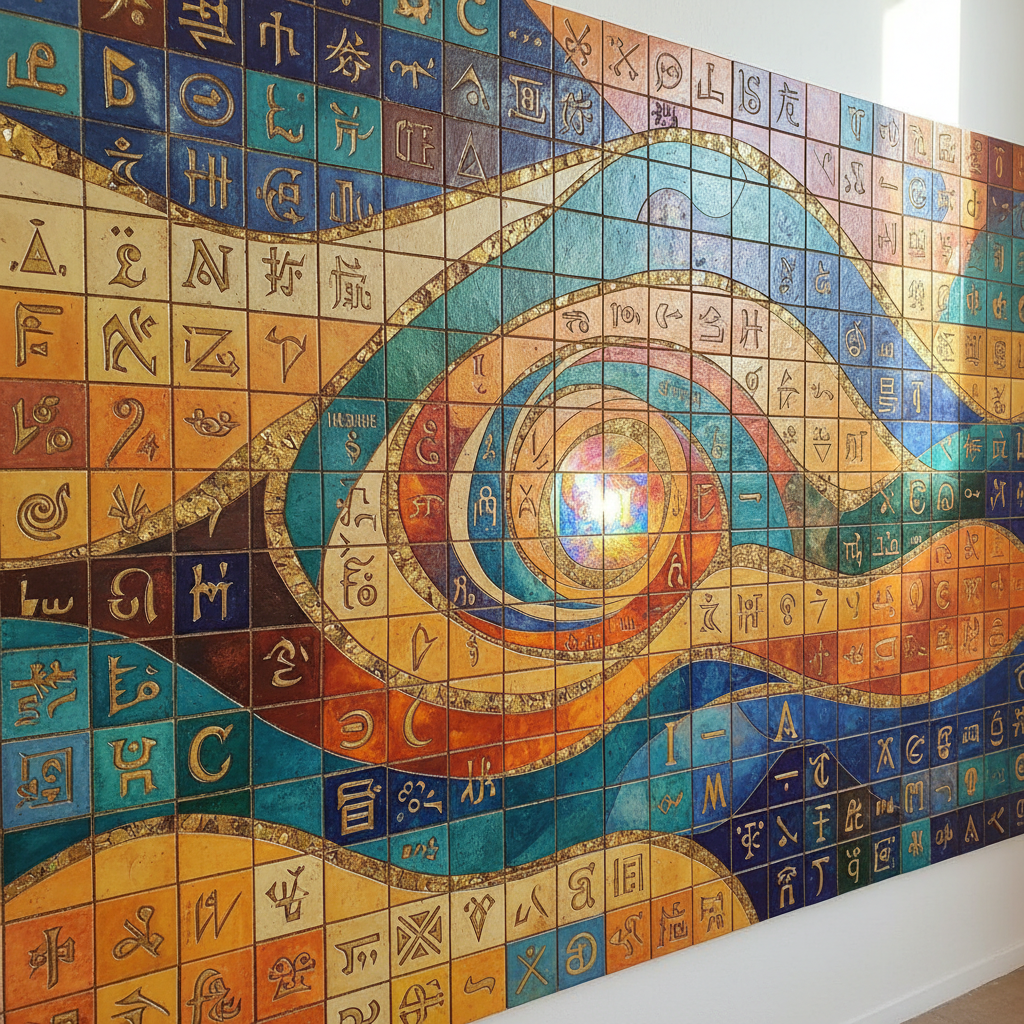
But that’s exactly the point. Imbricate comes from the Late Latin imbricāre, meaning “to cover with overlapping tiles.” It describes things arranged so each layer slightly covers the next, like roof tiles or fish scales. Everything fits into a larger pattern — concave and convex, each part supporting the others. Remove one, and the roof leaks. Or, in a network of ideas, the system fails.

That’s the metaphor. I refuse to take part in flattening language — reducing it until a generation can no longer express complexity, nuance, or possibility. Language is how every generation builds its world: not through quantity of words but through precision, depth, and semantic reach.
“The limits of my language mean the limits of my world.”
— Ludwig Wittgenstein, Tractatus Logico‑Philosophicus (5.6)
Some people say Wittgenstein later abandoned that idea. I don’t think so. He expanded it — made it richer, more intricate. His later concept of language games reminds us that speaking is never just describing; it’s acting: ordering, promising, asking, narrating, joking, praying, coding.
If my communication toolkit consists only of memes and quick reactions, my world contracts to fast irony, group belonging, and raw emotion. I become easy to manipulate. Even more, I’m asking to be manipulated.
But if I can also use richer more diverse language games — the critical essay, the extended argument, the technical explanation, the layered metaphor — then my world gets wider. I learn to think and build.
The biblical phrase
“You shall know the truth, and the truth shall set you free”
John 8:32
feels close to that idea. More human, less manipulable, though not necessarily happier.
That’s why I care about words like imbrication. I refuse to flatten language, because to flatten language is to flatten the worlds we can imagine.

Leave a Reply